
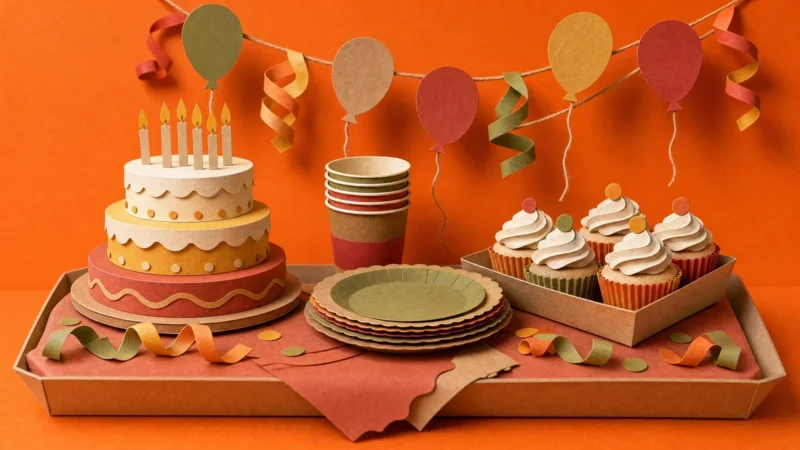
Birthday Cupcakes
Birthday Gifts Event Marketing Gift Ideas

How Many Birthday Cupcakes Do You Need Per Guest?

Planning numbers is the part of a party most people underestimate, especially when the guest list changes in the final week. How many birthday cupcakes do you need per guest depends on appetite, age group, serving style, and what else is on the table. With a simple baseline and a few quick checks, they can order confidently and avoid a tray of leftovers or, worse, an empty platter. How many birthday cupcakes do you need per guest as a simple rule? As a starting point, plan one cupcake per guest. That rule suits most Australian birthday parties where cupcakes are the main dessert and are served after food. If they expect big eaters, a long party, or minimal other sweets, it is safer to increase the count. If cupcakes are one option among several desserts, they can reduce the number without anyone noticing. When should they plan more than one cupcake per guest? They should plan 1.25 to 1.5 cupcakes per guest when cupcakes are the headline sweet and guests can help themselves. This often applies to backyard parties, park gatherings, and casual home events where people wander back for seconds. A second cupcake is also more likely if the cupcakes are mini, if teens are attending, or if guests stay for hours. In those cases, how many birthday cupcakes do you need per guest becomes more about grazing than a single dessert moment.” When can they plan fewer cupcakes per guest? They can plan 0.75 to 1 cupcake per guest when there is a birthday cake, a dessert table, or lots of sweets, slices, and fruit. If cupcakes are mainly for a photo moment, party favours, or kids only, the count can come down further. It also depends on timing. If cupcakes are served right after a big meal, fewer guests will want seconds. For many mixed-dessert setups, how many birthday cupcakes do you need per guest is closer to “one each, minus a few”. Does the guest age mix change how many cupcakes they need? Yes, the age mix changes demand quickly. For young children, one standard cupcake per child is usually enough, especially with party food and snacks. Teenagers often eat like adults and can be the group most likely to take extra. For adult-heavy gatherings such as a 30th or 40th, one each is still the baseline, but seconds rise when drinks are involved. If they are unsure, how many birthday cupcakes do you need per guest should be set by the hungriest group, not the average. How do mini cupcakes change the calculation? Mini cupcakes shift the maths because many guests will take two without thinking. A practical guide is 2 mini cupcakes per guest if minis are the main dessert, or 1 to 1.5 minis per guest if there are other sweets. Minis are also popular for children’s parties because they reduce mess and are easy to portion. When minis are on the menu, how many birthday cupcakes do you need per guest should be measured in “handful behaviour”, not formal servings. What if there is also a birthday cake? If a separate cake is served and everyone gets a slice, cupcakes become optional. In that case, 0.5 to 0.75 cupcakes per guest is often plenty, especially if cupcakes are offered as take-home extras. If the cake is small, decorative, or for candle photos only, they should not reduce the cupcake count much. The key question is whether the cake is a real serving dessert. That is where how many birthday cupcakes do you need per guest either drops or stays the same. Do dietary needs increase the total cupcake number? Dietary needs can increase the total because they may need separate batches. If a few guests require gluten-free, dairy-free, nut-free, or egg-free options, they should plan those as a dedicated allocation rather than hoping alternatives are left at the end. A safe approach is to cover each dietary guest with at least one suitable cupcake, plus one spare. This prevents awkward moments and cross-contact risks. It also keeps how many birthday cupcakes do you need per guest realistic across the whole group. How many extra cupcakes should they add for last-minute guests? They should add a buffer of 10% for most parties. For a list of 20 guests, that is 2 extra cupcakes. For 50 guests, it is 5 extras. This covers unexpected plus-ones, dropped cupcakes, and the host wanting one at the end. If the party involves families, neighbours, or classmates where attendance can swing, a 15% buffer is safer. When they ask how many birthday cupcakes do you need per guest, the honest answer usually includes a buffer, not just the headcount. How should they adjust for party length and serving style? Longer parties lead to repeat visits, especially if cupcakes sit out on a table. Self-serve setups typically need more than plated serving because guests choose based on what looks best, not what is “their portion”. If cupcakes are handed out once, one per guest is straightforward. If guests can grab any time, the count should rise to at least 1.25 per guest, or more if cupcakes are mini. Serving style is one of the biggest drivers behind how many birthday cupcakes do you need per guest. What are practical numbers for common Australian guest counts? For quick planning, these ranges work well for standard cupcakes in typical Australian home or backyard parties: If there are multiple desserts or a full cake service, they can use the lower end. If cupcakes are the only dessert, the upper end is safer. This is the most usable way to answer how many birthday cupcakes do you need per guest without overthinking. How do they avoid leftovers without running out? They should decide upfront whether cupcakes are meant to be eaten on-site or taken home. If take-home is encouraged, leftovers are not really a problem, and they can order closer to 1.25 per guest for convenience. If they want minimal leftovers, they
No Comments Read More
Where Do Promotional Lapel Pins and Pin Badges Work Best at Events?
Event Marketing

Where Do Promotional Lapel Pins and Pin Badges Work Best at Events?

In Australia, they are especially effective at events with repeat foot traffic, staff uniforms, volunteer teams, and communities that already love collecting mementos. Where do promotional lapel pins and pin badges work best at conferences and expos? They work best at conferences and expos when organisers use them to signal roles, access, or affiliation at a glance. Promotional lapel pins and pin badges help attendees spot speakers, sponsors, and staff without squinting at lanyards. In places like Sydney Olympic Park or the Melbourne Convention and Exhibition Centre, promotional pin badges and lapel pins also suit multi-day programs. People keep wearing them between sessions, which extends brand visibility beyond the booth. How do promotional lapel pins and pin badges perform at trade shows and industry meetups? They perform best when they reinforce credibility and belonging, especially in niche industries. Promotional lapel pins and pin badges can mark membership tiers, partner status, or “certified” groups in a simple, non-intrusive way. At Australian trade shows, they also fit well with quick introductions. A small badge on a blazer or tote strap becomes an instant icebreaker for sales teams and attendees alike. Why do promotional lapel pins and pin badges shine at networking events? They shine at networking events because they make introductions easier and more natural. Promotional lapel pins and pin badges give people something to comment on, which can soften the awkward first seconds of conversation. They work particularly well at after-work events across Brisbane, Perth, or Adelaide where dress codes vary. Pins can sit on a lapel, denim jacket, or bag, so branding stays visible without forcing a uniform look. Where do promotional lapel pins and pin badges fit within corporate events and staff functions? They fit best where organisers want unity without overdoing it. Promotional lapel pins and pin badges can recognise years of service, internal awards, or project teams while still looking polished. At Australian corporate functions, they also support event operations. Staff and contractors become easier to identify on busy floors, especially when lanyards are tucked away or not worn consistently. How can promotional lapel pins and pin badges be used at product launches? They work best at product launches when they carry a simple story: a logo mark, icon, or limited-edition design linked to the launch theme. Promotional lapel pins and pin badges then become a collectible, not just a freebie. In Australian retail or hospitality launches, they also help staff look “on theme” without changing uniforms. Guests notice them during photos, toasts, and media moments. What makes promotional lapel pins and pin badges effective for festivals and community events? They work particularly well at festivals and community events, where attendees are already interested in taking home a small keepsake. Custom event badges can be used for local markets, council celebrations, cultural festivals, and community gatherings, giving families, volunteers, and organisers a simple way to remember the occasion. They also work well outdoors across Australia where paper items get damaged. A metal pin on a hat, jacket, or bag survives a full day of weather, queues, and movement. Where do promotional lapel pins and pin badges help most at charity fundraisers? They help best when the goal is visibility and shared cause identity. Promotional lapel pins and pin badges can signal “supporter,” “donor,” or “volunteer,” which encourages others to join in. At Australian fun runs, gala nights, and community appeals, they also reduce friction at check-in. A colour-coded pin can confirm registration types quickly, especially when teams are managing crowds. How do promotional lapel pins and pin badges work at sporting events and club days? They work best where fans and members already wear colours and symbols proudly. Promotional lapel pins and pin badges suit local footy clubs, surf lifesaving presentations, and school sport carnivals. In Australia, clubs often place strong value on community identity and shared achievements. Club commemorative badges can recognise committee roles, junior teams, milestone seasons, or special events, while their compact size makes them easy for members to display on caps, scarves, jackets, or bags. Why are promotional lapel pins and pin badges strong for award nights and recognition ceremonies? They are strong because they feel permanent and earned. Promotional lapel pins and pin badges can recognise finalists, winners, or long-term contribution in a way that looks formal and lasting. At Australian award nights, they also photograph well. A pin on a jacket is visible in stage shots and group photos, which helps organisers and sponsors extend the event’s reach after the night ends. Where do promotional lapel pins and pin badges belong in university and school events? They belong where identity and belonging matter, such as orientation weeks, open days, and society fairs. Promotional lapel pins and pin badges help students find their people while giving clubs a low-cost, high-visibility item. Across Australian campuses, they also support volunteering. Student ambassadors and helpers can be recognised quickly by visitors without needing heavy signage or full uniform changes. How can promotional lapel pins and pin badges support VIP access and event operations? They support access best when used as a secondary identifier for quick scanning and confidence at the door. Promotional lapel pins and pin badges can mark VIP, media, backstage, or crew in a subtle way. They are especially useful at busy Australian venues where wristbands are hidden by sleeves or removed. Staff can spot the pin instantly, reducing back-and-forth and keeping lines moving. What are the best placement ideas for promotional lapel pins and pin badges on the day? They work best when organisers make wearing them effortless and socially normal. Promotional lapel pins and pin badges should be handed out at registration, placed in welcome packs, or offered at a simple “pick your design” station. Common Australian-friendly placements include blazer lapels, shirt pockets, tote straps, hats, and lanyards. Clear signage helps, but a staff member wearing one does more to prompt uptake. How should organisers choose the right event type for promotional lapel pins and pin badges? They should choose

No Comments Read More