
Are Metal Business Cards the Ultimate Premium Branding Solution?
Metal business cards represent a powerful shift in how companies approach their corporate identity. These cards instantly communicate quality, permanence, and attention to detail—qualities that paper alternatives simply cannot match.
The trend toward metal cards has accelerated dramatically across industries. Companies recognize that first impressions matter, and handing someone a substantial metal card creates an immediate impact that resonates long after the initial meeting. The weight, texture, and visual appeal trigger a psychological response that associates your brand with premium value.
Metal Business Cards: The Premium Branding Upgrade More Companies Are Choosing isn’t just a catchy phrase—it reflects a genuine market shift. Businesses investing in these cards report higher retention rates and more memorable networking experiences. The cards serve dual purposes: practical contact information delivery and tangible brand statements.
The premium branding solution works because it breaks pattern interruption. In a sea of flimsy paper cards, metal stands out physically and psychologically. Recipients often comment on the card itself, creating natural conversation starters and extending your brand interaction beyond the typical exchange.
What Materials Are Commonly Used for Metal Business Cards?
Stainless Steel: The Durable Choice
Stainless steel cards dominate the metal business card market due to their exceptional durability and professional appearance. This material offers a sleek, modern aesthetic that appeals to businesses across industries, from tech startups to financial services. The natural silver tone of stainless steel provides a neutral canvas that works with virtually any brand color scheme, while its resistance to corrosion ensures the card maintains its pristine appearance for years.
Aluminum: Lightweight and Versatile
Aluminum business cards present a lightweight alternative without sacrificing visual impact. Weighing significantly less than stainless steel, these cards slip easily into wallets and cardholders while still delivering that premium metal feel. The material’s natural malleability allows for more intricate cut-through designs and detailed etching work. Aluminum also accepts anodizing treatments exceptionally well, opening up possibilities for vibrant color applications that go beyond traditional metallic tones.
Copper: Warmth and Distinction
Copper business cards bring warmth and distinction to professional networking. The reddish-brown hue creates an immediate visual differentiation from standard silver-toned metals, making these cards memorable at first glance. Copper develops a natural patina over time, giving each card a unique character that actually enhances its appeal. This living quality resonates particularly well with brands emphasizing authenticity, craftsmanship, or heritage.
Brass: A Sophisticated Middle Ground
Brass business cards combine the warmth of copper with enhanced durability and a golden undertone. This alloy creates a sophisticated middle ground between silver and gold aesthetics, offering a rich appearance without the premium price point of precious metals. Brass accepts various finishing techniques beautifully, from high-polish mirror finishes to subdued matte treatments. The material’s density provides a substantial weight that communicates quality through tactile experience alone.
Luxury Metal Options That Elevate Brand Perception
Gold finishes transform metal business cards into genuine luxury statements. Whether applied as plating over base metals or used as solid gold for ultra-premium applications, this finish immediately signals exclusivity and success. Gold-plated options provide the prestigious appearance at a more accessible price point, while maintaining the durability benefits of the underlying metal structure.
Gunmetal finishes deliver a bold, contemporary aesthetic that appeals to brands seeking an edgier identity. This dark gray to black
How Can Businesses Customize Metal Business Cards for Maximum Impact?
Customization transforms a standard metal card into a powerful brand statement. The right combination of finishing techniques, surface treatments, and design methods creates a tactile experience that reinforces your brand identity from the moment someone receives your card.
What finishing techniques create the most distinctive looks?
Etching finishes remove material from the metal surface to create recessed designs, text, or patterns. This technique produces depth and dimension that catches light differently depending on the viewing angle. Chemical etching creates smooth, precise lines ideal for detailed logos, while mechanical etching offers a more industrial aesthetic with slightly rougher textures.
Polished metal finish delivers mirror-like reflectivity that screams luxury and attention to detail. This high-gloss surface works exceptionally well for brands in premium sectors like jewelry, high-end real estate, or luxury automotive. The reflective quality makes colors appear more vibrant and creates visual interest through light play.
Brushed finishes provide a middle ground between polished and matte surfaces. Fine directional lines across the metal create subtle texture that reduces fingerprint visibility while maintaining an upscale appearance. This finish suits professional services firms, architects, and design studios seeking sophistication without excessive shine.
How do matte and gloss finishes affect brand perception?
Matte finish communicates understated confidence and modern minimalism. The non-reflective surface feels velvety to the touch and projects a contemporary, professional image. Tech startups, creative agencies, and consulting firms gravitate toward matte treatments because they convey innovation without ostentation. The subdued appearance also makes text and graphics highly legible under various lighting conditions.
Gloss finishes create immediate visual impact through their reflective properties. They photograph well, catch attention in networking situations, and suggest premium quality. Hospitality brands, event planners, and lifestyle businesses often choose gloss treatments to project energy and approachability.
Combining both finishes on a single card creates striking contrast. A matte background with glossy text elements, or vice versa, adds visual hierarchy and guides the eye to key information.
What role does laser engraving play in customization?
Laser engraving uses concentrated light beams to permanently mark or cut metal with microscopic precision
What Design Elements Enhance the Effectiveness of Metal Business Cards?
Vector Artwork Design
Vector artwork design forms the foundation of any successful metal business card. Unlike raster images that pixelate when scaled, vector files maintain crisp edges and clean lines regardless of size. This becomes critical when translating designs onto metal surfaces through laser engraving or etching processes.
Designers should provide artwork in formats like AI, EPS, or SVG to ensure every detail—from company logos to contact information—appears razor-sharp on the finished card.
Deep Etching Designs
Deep etching designs add a dimensional quality that flat printing cannot replicate. This technique removes metal from specific areas, creating recessed patterns that catch light differently than the card’s surface. The depth variation produces subtle shadows and highlights that shift as the card moves, drawing attention to key brand elements.
Companies often use deep etching for logos or taglines, making these elements literally stand out through tactile contrast.
The depth of etching can be customized based on design goals:
- Shallow etching (0.1-0.2mm) creates subtle texture while maintaining a sleek profile
- Medium etching (0.3-0.5mm) offers noticeable depth that invites touch
- Deep etching (0.6mm+) produces dramatic shadows and bold visual impact
Rounded Corners
Rounded corners soften the industrial feel of metal while adding a contemporary aesthetic. Sharp 90-degree corners can feel aggressive or dated, whereas rounded edges convey approachability and modern design sensibility.
This small detail prevents cards from snagging on pockets or wallets, improving everyday usability while contributing to a premium feel.
Cut-Through Designs
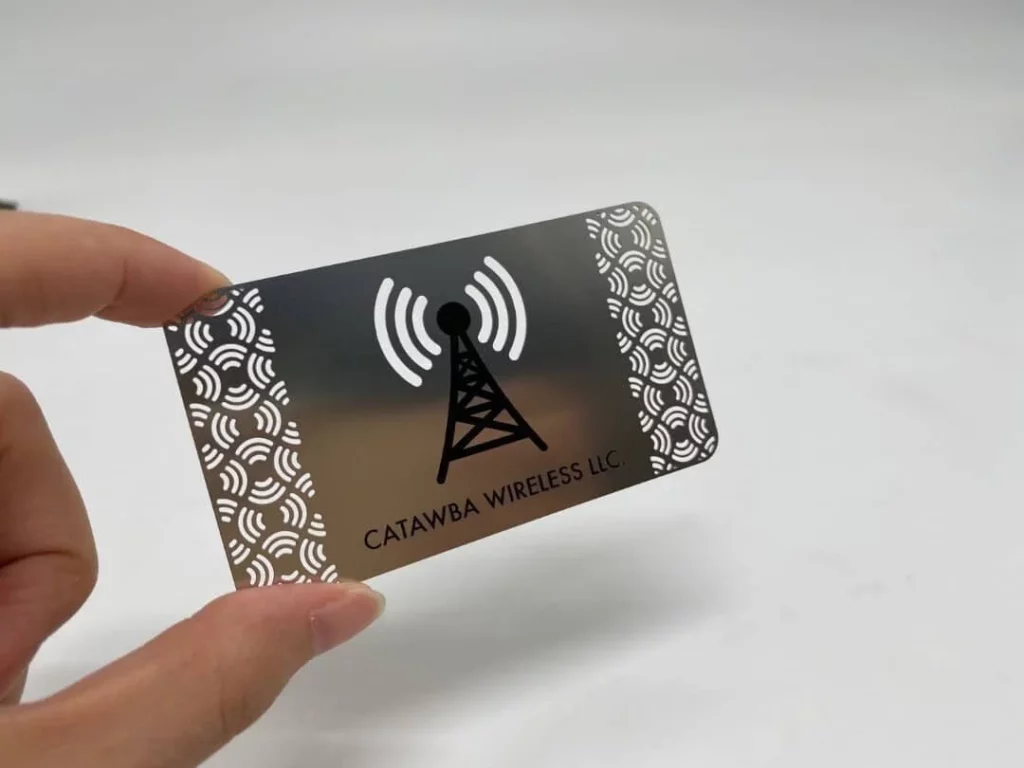
Cut-through designs represent the pinnacle of metal card artistry. Strategic negative space—whether geometric patterns, brand symbols, or decorative elements—transforms cards into miniature sculptures.
These openings create visual intrigue and make cards instantly recognizable by touch alone. A tech company might incorporate circuit-board-inspired cutouts, while a luxury
Why Are Metal Business Cards More Durable Than Traditional Cards?
Durable business cards made from metal outlast paper and plastic alternatives by years, not months. Metal cards resist bending, tearing, and water damage that quickly destroys traditional cards in wallets and pockets.
Paper business cards deteriorate rapidly through daily handling. They accumulate creases, torn edges, and coffee stains within weeks of distribution. Plastic cards fare slightly better but still scratch easily and crack under pressure. Metal cards maintain their structural integrity regardless of environmental conditions or handling frequency.
Physical Resistance That Matters
Metal withstands the real-world challenges that ruin conventional cards:
- Moisture immunity: Rain, spilled drinks, or humid environments leave metal cards unaffected while paper cards warp and disintegrate
- Bend resistance: Metal cards return to their original shape when flexed, unlike paper that permanently creases
- Scratch protection: Stainless steel and brass surfaces resist the scratches that make plastic cards look worn and unprofessional
- Temperature stability: Extreme heat or cold doesn’t warp metal cards as it does with plastic alternatives
Legibility That Lasts
The information on metal business cards remains crisp and readable for years. Laser engraving creates permanent markings that cannot fade, smudge, or rub off like printed ink on paper cards. Contact details stay sharp even after thousands of touches and transfers between hands.
Traditional cards lose their professional appearance quickly. Ink fades from UV exposure, text smears from finger oils, and edges fray from wallet friction. Recipients often discard damaged paper cards, eliminating any chance of future contact. Metal cards avoid this fate entirely.
Long-Term Brand Representation
A metal card continues representing your brand professionally long after distribution. Recipients keep metal cards as conversation pieces rather than discarding them like paper alternatives. This extended lifespan means your contact information remains accessible years later when networking connections resurface.
The durability factor also communicates brand values. Handing someone a card that feels substantial and permanent suggests your business operates with the same quality standards. The physical permanence of metal mirrors the lasting relationships you aim to build with clients and partners.
Moreover, the long-term resilience of metal business cards not only enhances their practicality but also adds an element of prestige to your brand image.
What Smart Features Can Be Integrated into Metal Business Cards?
Smart metal business cards bridge the gap between physical networking and digital connectivity. These technologically enhanced cards contain embedded features that allow recipients to access your online presence instantly, transforming a simple exchange into an interactive experience.
1. NFC Chips: The Most Advanced Integration Option
NFC chips represent the most advanced integration option for metal business cards. Near Field Communication technology enables contactless data transfer when the card is tapped against a smartphone. Recipients can instantly access your website, LinkedIn profile, digital portfolio, or contact information without typing a single character. The chip sits flush within the metal card’s structure, maintaining the sleek aesthetic while adding powerful functionality.
2. QR Codes: A Visible Yet Effective Smart Feature
QR codes offer a more visible yet equally effective smart feature. Laser-etched or printed directly onto the metal surface, these scannable codes provide immediate access to:
- Digital business profiles
- Company websites or landing pages
- Product catalogs or service portfolios
- Video introductions or presentations
- Social media accounts
The permanence of laser-etched QR codes on metal ensures they remain scannable for years, unlike paper cards where printed codes can fade or smudge.
3. Magnetic Strips: Adding Value for Access Control
Magnetic strips add another dimension to smart metal business cards, particularly valuable for businesses requiring access control or membership identification. These strips can store encrypted data, making the card function as both a networking tool and a practical access credential for offices, events, or exclusive spaces.
4. RFID Technology: Contactless Identification Capabilities
RFID technology provides contactless identification capabilities similar to NFC but with longer read ranges. This feature proves especially useful for conference badges, VIP access cards, or situations where quick identification from a distance matters.
The integration of these smart features doesn’t compromise the card’s premium appearance. Modern manufacturing techniques allow chips and technology to be seamlessly embedded within the metal layers, preserving the card’s thin profile and sophisticated look. The metal construction actually protects these technological components better than plastic alternatives, ensuring long-term functionality.
Smart metal business cards also support dynamic QR codes, which can be updated remotely without reprinting the physical card. This flexibility allows you to redirect recipients to different content as your business evolves, maximizing the card’s lifespan and utility.
Which Types of Brands Benefit Most from Using Metal Business Cards?
Metal business cards work best for brands where first impressions directly translate to business value. Companies in industries where credibility, innovation, and premium positioning matter most see the highest return on this investment.
1. Technology and Startup Sectors
Tech startup branding demands differentiation in crowded markets. Founders and executives in software development, artificial intelligence, blockchain, and fintech use metal cards to signal their company’s cutting-edge approach. The physical weight and modern aesthetic of a stainless steel or aluminum card reinforces the message that the company builds quality products. When pitching to investors or recruiting top talent, these cards become conversation starters that extend beyond a simple exchange of contact information.
2. Luxury and High-End Services
Luxury marketers, high-end real estate agents, private wealth advisors, and boutique consultants rely on metal business cards to match their premium service offerings. A brass or gold-finished card communicates exclusivity before a single word is spoken. These professionals serve clients who expect exceptional quality in every interaction, and a paper card would create cognitive dissonance with their brand promise.
3. Creative and Design Industries
Architects, interior designers, photographers, and creative directors use metal cards as miniature portfolios. The card itself demonstrates their attention to detail and commitment to superior craftsmanship. Laser-etched designs or cut-through patterns showcase technical skill while the material choice reflects their aesthetic sensibilities.
4. Professional Services Requiring Trust
Attorneys, medical specialists, and executive coaches benefit from the gravitas metal cards provide. These professions depend on establishing immediate credibility, and the substantial feel of a metal card subconsciously reinforces expertise and reliability. The durability also ensures the card remains in a prospect’s wallet rather than being discarded.
5. B2B Sales and Enterprise Solutions
Companies selling high-ticket items or enterprise software solutions use metal cards to differentiate their sales teams. When competing against multiple vendors, the account executive with a memorable metal card gains a psychological advantage. The card serves as a physical reminder of the company’s commitment to quality and innovation, keeping the brand top-of-mind during lengthy decision-making processes. Read more about Practical B2B marketing.
What Are the Standard Specifications That Businesses Should Consider When Ordering Metal Business Cards?
Dimensions: Sticking to the Classics
Standard business card dimensions 2×3.5 inches remain the most practical choice for metal cards. This sizing ensures compatibility with traditional wallets, cardholders, and business card organizers that recipients already own. Deviating from these measurements—even by a few millimeters—can create storage challenges and reduce the likelihood that contacts will keep your card accessible.
The universal 2″ x 3.5″ format also maintains consistency across your networking materials. When your metal cards align with industry-standard dimensions, they integrate seamlessly into existing business card books, scanners, and digital card management systems. This standardization matters particularly for international business relationships, as the credit card-sized format translates across different markets and professional contexts.
Thickness: Finding the Sweet Spot
Metal business cards typically measure 0.5mm in thickness, striking a careful balance between substantial feel and practical portability. This specification provides enough heft to communicate quality without becoming cumbersome in a wallet or cardholder. Cards thicker than 0.8mm risk feeling bulky and may not fit standard card slots, while thinner options below 0.3mm can feel flimsy and undermine the premium positioning.
The 0.5mm standard offers several advantages:
- Sufficient rigidity to prevent bending or warping
- Comfortable weight that feels substantial without being heavy
- Compatibility with most wallet card slots and holders
- Adequate surface area for detailed engraving work
Weight Considerations for Different Materials
Material choice directly impacts the card’s final weight and handling experience. Stainless steel cards at standard thickness weigh approximately 28-32 grams, creating a noticeable but manageable presence. Aluminum alternatives reduce this to 15-18 grams while maintaining durability, making them ideal for professionals who carry multiple cards or prefer lighter networking materials.
Brass and copper options fall between these ranges, offering distinct tactile experiences that reinforce brand personality. Heavier cards communicate luxury and permanence, while lighter metals emphasize modern minimalism and practicality.
Edge Finishing and Corner Options
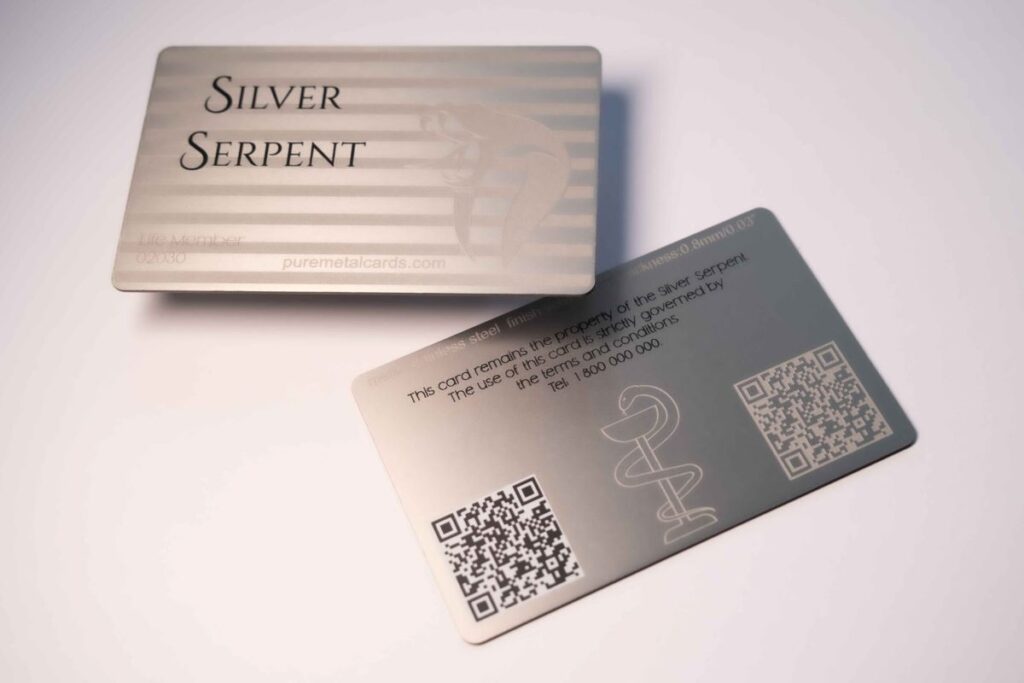
Standard specifications extend beyond dimensions to include edge treatments. Rounded corners with a 3mm radius prevent snagging on fabric and ensure smooth insertion into wallets or cardholders. This detail enhances both functionality and aesthetics, contributing to an overall polished look.
Additionally, businesses can explore various edge finishes such as brushed or polished surfaces to further customize their metal cards’ appearance. These subtle yet impactful choices add depth to the design while maintaining adherence to industry standards.
Are Metal Business Cards Worth the Investment for Companies Looking to Make Lasting Brand Impressions?
Metal business cards deliver exceptional ROI for companies prioritizing memorable first impressions. These premium branding solutions transform a simple exchange into a statement of quality, instantly communicating that your brand values excellence and attention to detail.
The tactile weight and visual impact create an immediate perception of professionalism that paper alternatives simply cannot match. Recipients are 5x more likely to retain metal cards, keeping your brand visible long after initial contact. This extended exposure justifies the higher upfront cost through sustained brand recall.
Metal Business Cards: The Premium Branding Upgrade More Companies Are Choosing represents a strategic investment in your company’s image. The cards signal prestige during physical networking events, client meetings, and industry conferences where standing out matters most.
Consider investing in metal business cards if your company competes in markets where differentiation drives success. The unique and memorable branding solution positions your business as forward-thinking and quality-focused—attributes that resonate with decision-makers and high-value clients who appreciate premium branding solutions that reflect their own standards.
Related : The Branding Power of Custom Bottle Openers for Bars, Breweries, and Events
Comments